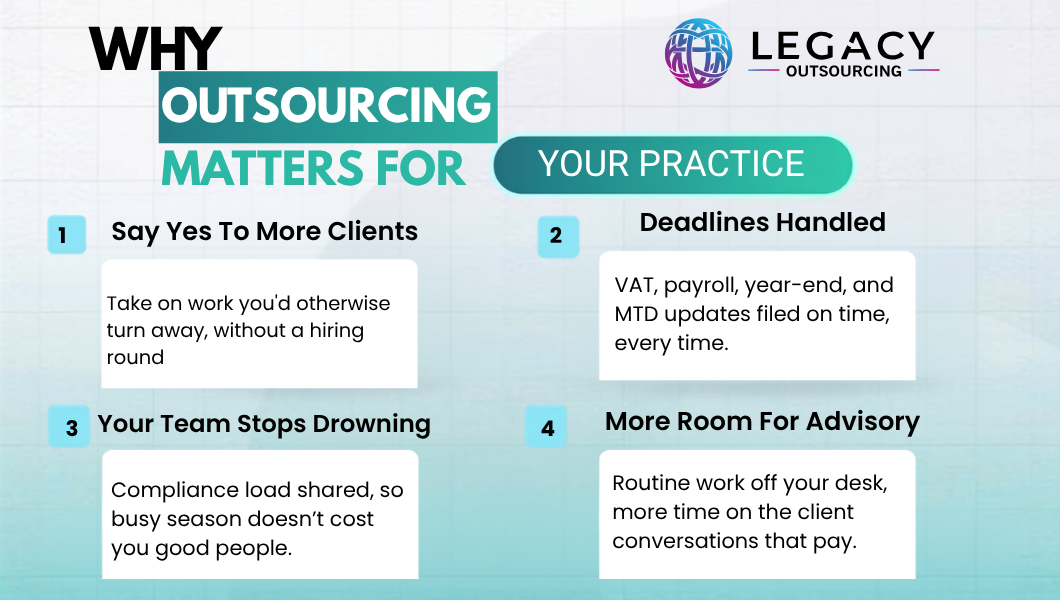

This section explores why firms rely on managed service providers for tech hiring, highlighting benefits such as access to skilled talent, faster hiring, and cost efficiency.
-
- Introduction
- The Tech Talent Shortage Is Real
- Faster Access to Skilled Expertise
- Predictable and Scalable Cost Structures
- Reduced Operational Risk
- Focus on Core Business Strategy
- Access to Advanced Tools and Infrastructure
- Cybersecurity and Compliance Expertise
- Global Talent Without Geographic Constraints
- The Bigger Picture: Managed Services as Strategic Infrastructure
- Final Thought
- FAQs
Introduction
Hiring tech talent in 2025 is no longer straightforward.
The demand for developers, cloud engineers, cybersecurity specialists, data analysts, and AI professionals continues to outpace supply. At the same time, salary expectations are rising, competition is global, and hiring cycles are getting longer.
For many UK firms, building and maintaining an in-house tech team has become expensive, slow, and operationally risky.
This is why more businesses are turning to Managed Service Providers (MSPs).
Not as a temporary fix but as a long-term strategy.
The Tech Talent Shortage Is Real
Across the UK, companies are facing:
- Longer recruitment timelines
- Increased salary expectations
- Aggressive counter-offers
- High employee turnover
- Rising training and onboarding costs
For SMEs and mid-sized firms, competing with large enterprises for top talent can be difficult.
Even after hiring, retaining skilled tech professionals remains a challenge.
MSPs provide an alternative model one that focuses on outcomes rather than headcount.
Faster Access to Skilled Expertise
Managed Service Providers maintain ready-built teams of specialists across multiple technical disciplines.
Instead of:
- Advertising roles
- Screening CVs
- Conducting interviews
- Negotiating offers
- Managing onboarding
Businesses gain immediate access to:
- Experienced developers
- Infrastructure engineers
- Security specialists
- Support teams
- Project managers
Speed matters in tech.
Delays in hiring can delay product launches, digital transformation initiatives, and customer-facing improvements.
MSPs reduce that lag.
Predictable and Scalable Cost Structures
Internal tech hiring comes with fixed costs:
- Salaries
- Employer NI contributions
- Pension contributions
- Recruitment fees
- Training budgets
- Paid leave
Managed Service Providers offer structured service agreements with predictable pricing models.
This allows businesses to:
- Convert fixed employment costs into operational expenses
- Scale support up or down based on project needs
- Avoid long-term financial commitments
- Improve cash flow predictability
Flexibility is crucial in uncertain economic conditions.
Reduced Operational Risk
Tech environments are complex.
Downtime, cybersecurity breaches, and system failures carry significant risk.
MSPs operate with defined service-level agreements (SLAs), structured workflows, and accountability frameworks.
This reduces:
- Single-point dependency risk
- Internal knowledge silos
- Vulnerability due to staff turnover
Structured external management strengthens operational continuity.
Focus on Core Business Strategy
When internal teams are stretched thin managing IT infrastructure, troubleshooting issues, or handling security updates, innovation slows.
Outsourcing tech management to MSPs allows internal leadership to focus on:
- Product development
- Customer growth
- Market expansion
- Strategic initiatives
This mirrors the same operational philosophy applied in finance and compliance.
At Legacy Outsourcing, finance functions such as accounts payable and payroll are built around defined workflows, approval hierarchies, and exception management systems.
Well-designed outsourced accounts payable services embed control into execution.
The objective is not just faster processing but:
- Fewer exceptions
- Clearer accountability
- Stronger compliance alignment
The same principle applies in technology.
Structured management enhances stability and frees leadership focus.
Access to Advanced Tools and Infrastructure
MSPs often invest in:
- Enterprise-grade monitoring systems
- Cybersecurity frameworks
- Cloud management platforms
- Automated reporting tools
- Advanced analytics systems
For many businesses, replicating this infrastructure internally would be cost-prohibitive.
Partnering with an MSP provides access without capital investment.
Cybersecurity and Compliance Expertise
Cyber threats continue to evolve.
UK businesses must maintain:
- GDPR compliance
- Secure cloud environments
- Data protection policies
- Real-time monitoring
MSPs typically specialise in security best practices and regulatory compliance, reducing exposure to costly breaches.
In a digital economy, security is not optional.
It is foundational.
Global Talent Without Geographic Constraints
Managed Service Providers often operate internationally.
This enables businesses to:
- Access broader talent pools
- Leverage time-zone advantages
- Reduce local hiring pressure
- Maintain 24/7 operational support
Global collaboration strengthens resilience and improves service continuity.
The Bigger Picture: Managed Services as Strategic Infrastructure
The shift toward MSPs reflects a broader business trend:
Organisations are moving from ownership models to access models.
Instead of owning every internal capability, businesses are accessing structured expertise externally.
This approach:
- Improves agility
- Reduces fixed overhead
- Strengthens scalability
- Protects leadership bandwidth
- Enhances operational stability
In 2025, agility defines competitiveness.
Final Thought
Tech hiring will remain competitive and expensive.
But businesses do not need to choose between growth and cost control.
Managed Service Providers offer:
- Expertise without recruitment delays
- Stability without fixed overhead burden
- Scalability without internal strain
The question is no longer:
“Should we build everything internally?”
It is:
“Are we structured to access the expertise we need without slowing down?”
Because in today’s market, the firms that move fastest are those built on structured partnerships.
FAQs: Managed Service Providers & Tech Hiring
What is a Managed Service Provider (MSP)?
An MSP is an external partner that manages specific IT functions or technology services under defined agreements and performance standards.
Why are firms choosing MSPs over in-house hiring?
Due to talent shortages, rising costs, scalability needs, and reduced operational risk.
Are MSPs suitable for SMEs?
Yes. SMEs benefit from access to enterprise-level expertise without large internal hiring costs.
Do MSPs reduce control?
No. Structured service-level agreements and reporting often increase visibility and accountability.
What services are typically managed by MSPs?
IT infrastructure, cybersecurity, cloud services, software development support, helpdesk services, and digital transformation projects.
Email us: info@legacyoutsourcing.co.uk
Visit us: Legacy Outsourcing UK
Instagram: @legacyoutsourcing
Facebook: Legacy Outsourcing